Exterior House Painting Cost in 2026: Ranges and Factors
Exterior house painting cost runs $4,000 to $35,000+. See price ranges by home size, what drives the bid, and NYC lead-safe rules.
By Excellent Home Improvement & Remodeling
$4,000 to $8,500 covers a small single-story or partial exterior repaint. A standard two-story repaint, including siding and trim, costs $8,500 to $18,000. For a large home with extensive preparation and restoration, expect $18,000 to $35,000 or more. Within each range, the main cost drivers are the hours required for preparation and access, not the amount of paint.
Paint is a small share of the bid. The benchmark example gives a project cost of about $4,675, with coating and other materials making up 22.6% of the total and labor, overhead and contractor margin accounting for the rest. That split helps explain why bids for the same home can differ by thousands of dollars: they may include different amounts of scraping, caulking and hard-to-reach work.
Compare estimates line by line. A low price may leave out preparation or access work, which can affect how long the finish lasts. The useful comparison is not just total cost, but what the crew will prepare and complete for that price.
Table of Contents
- Exterior House Painting Cost Ranges by Project Scope
- Materials, Labor and Access
- What a Low Exterior Quote Leaves Out
- How Many Gallons Your Exterior Needs
- Pre-1978 Lead Rules and What They Add to NYC Costs
- Compare Bids and Lock the Scope Before You Sign
Exterior House Painting Cost Ranges by Project Scope
Nearly every residential exterior repaint lands in one of three bands, and the band tracks preparation and access much more than wall area. A single-story ranch with sound siding and intact caulk sits near the floor. A two-story colonial with peeling trim and a gable nobody can reach from a ladder sits near the ceiling, even at the same square footage.
| Project scope | Typical cost | What is included |
|---|---|---|
| Small single-story or partial exterior | $4,000 to $8,500 | Standard prep and finish on the exterior surfaces in scope |
| Standard two-story full repaint | $8,500 to $18,000 | Siding, trim and standard prep across the full house |
| Large home or extensive preparation | $18,000 to $35,000 or more | Heavy scraping, restoration and detailed trim work |
| Deck staining (separate scope) | $900 to $2,600 | Power wash, sanding and stain or sealer over one to three days |
| Deck repair, staining and sealing | $2,500 to $8,000 | Board and railing replacement, structural repair and premium stain or sealer |
Read the inclusion column before you read the price column. Exterior painting covers siding, stucco, brick, soffits, decks and fences, each surface prepped, primed and finished, so a proposal should name which of those are inside the number and which belong to a different trade or a different line.
Deck work is priced on its own because it involves different products and different failure modes. Staining alone typically runs $900 to $2,600 and takes one to three days. Once boards, railings or framing need replacement, the scope moves to $2,500 to $8,000.
How to use these bands
Match the row that fits your house on three variables: number of stories, net exterior surface area, and the current condition of the coating. Then check whether the quote sits inside that band. A bid far below the floor of its row is not a bargain, it's a scope that has been trimmed somewhere, and the rest of this breakdown shows where that trimming usually happens.
A per-square-foot rate deserves suspicion for a different reason. The rate compresses an entire job into one number, so the expensive labor, which is the scraping, the caulking and the hours spent on a ladder, gets averaged into the cheap part, which is the paint. Two houses of identical size can sit at opposite ends of the same rate and still both be priced correctly.
Materials, Labor and Access
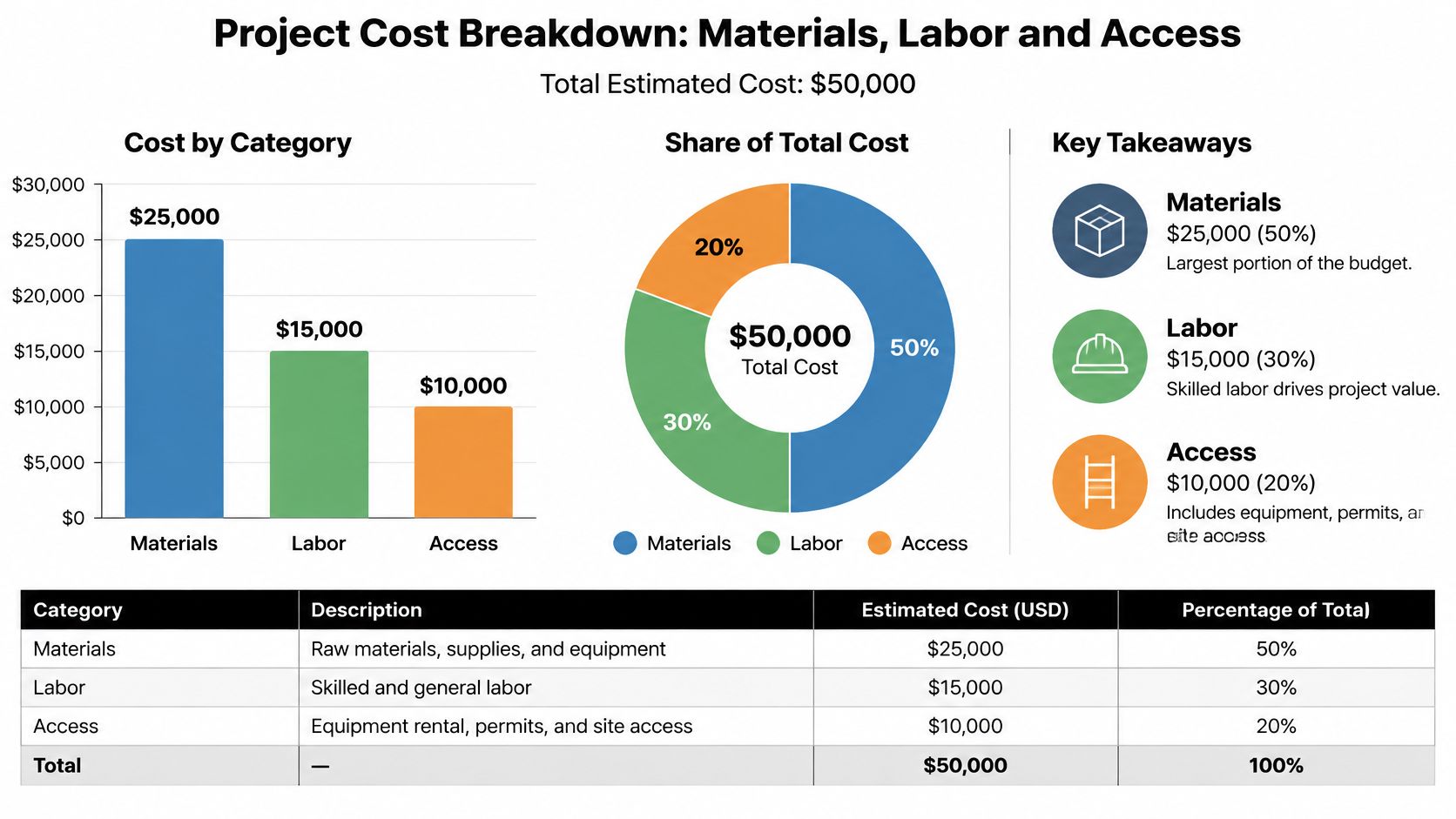
In the $4,675 benchmark project, materials account for less than a quarter of the bid, while labor, overhead and margin make up the rest. The benchmark puts a representative job at approximately $4,675, with most work between $4,279 and $5,660, and estimates 58.1 crew-hours (thefatbook's exterior house painting cost benchmark). That breakdown points to the main cost driver: time spent on the work, not the area being painted.
| Component | Amount | Share of bid |
|---|---|---|
| Paint and other materials | $1,058 | 22.6% |
| Labor | $2,123 | 45.4% |
| Overhead | $781 | 16.7% |
| Contractor margin | $713 | 15.3% |
| Total benchmark project | $4,675 | 100% |
What each line actually buys
Materials include paint, primer, caulk, masking film and other supplies. At 22.6% of the benchmark, they are the smallest listed share. Switching products may change this line, but it cannot erase the labor needed to prepare and coat the house.
Labor covers washing, scraping, sanding, caulking, masking, priming, spraying or rolling, and cleanup. At 45.4%, it is the largest single line. Additional preparation or difficult working conditions can add hours even when the painted area stays the same.
Overhead is 16.7% in the benchmark. It supports business costs such as insurance, vehicles, scheduling and office work, which do not disappear just because a project is small.
Margin accounts for 15.3%, or $713 on the benchmark project. That is roughly the value of one unexpected day of carpentry repair. If a contractor absorbs unplanned work without changing the price, the cost can come out of margin or be recovered by reducing time elsewhere in the scope.
Painter wages offer another useful reference, but they are not the same as the price charged for a completed job. The Bureau of Labor Statistics reports a 2025 median wage of $23.75 per hour, or $49,400 annually, for construction and maintenance painters (BLS occupational profile for painters). A contractor's bill must also cover payroll taxes, workers' compensation, liability insurance, supervision, equipment, travel and profit. Comparing a bid directly with a painter's wage leaves out those costs.
The test to apply: If labor is well under half the total, ask which work hours the bid excludes.
Access and preparation can raise labor costs without adding painted surface. Scraping, caulking, carpentry repairs, masking, ladder work and additional stories all require time; lifts or scaffolding may also add rental costs. The exterior painting schedule is weather-dependent, from spring through late fall, so delays can tighten the available working window. Exterior painting services are scheduled around those seasonal conditions. The long-term cost depends less on square footage alone than on whether the bid includes the preparation and access needed to complete the work.
What a Low Exterior Quote Leaves Out
The finish coat is only one line in an exterior bid. The longer-term cost often depends more on what the crew prepares and repairs before painting than on the area covered. HomeAdvisor gives a broad national range of $1.50 to $4 per square foot and an average project near $3,178. Those figures are useful context, but they do not show which substrate work a specific quote includes.
A low bid may omit washing, scraping, caulking, repairs or primer. If failed caulk, soft wood, bare metal or moisture damage remains under fresh paint, the coating can fail early, bringing another round of repair and repainting. Compare the scope line by line:
| Item | Minimum scope | Durability scope |
|---|---|---|
| Washing | Light rinse or spot cleaning | Power wash, with the method and cost specified |
| Loose paint | Spot scrape only | Scrape to sound paint and feather the edges |
| Caulking | Not included | Replace failed caulk at joints, windows and doors |
| Wood repair | Visible rot left in place | Carpentry repair of soft or rotted wood |
| Primer | Spot prime bare areas | Prime bare, patched and repaired surfaces |
| Finish coats | One finish coat | Two finish coats to the specified film build |
| Expected result | Shorter life and an earlier repaint | Longer life and fewer callbacks |
Two area traps that distort every estimate
Floor area is a poor substitute for measuring the surfaces to be painted. Gables, dormers and bump-outs can increase siding area, while a tall, narrow townhouse may have less exterior wall area than its floor area suggests.
Trim and separate structures need their own scope. Porches, shutters, fences and hard-to-reach gables affect labor even when the siding measurement stays the same. Water management matters, too: overflowing gutters can direct water against fascia and soffits, contributing to damage that requires carpentry before painting. A Bronx gutter installation reference provides context on this part of the exterior envelope; it does not determine what a painting bid includes.
Price deterioration before it is found. A written allowance for concealed damage turns hidden rot into a defined cost rather than an open-ended change order after scraping begins.
Ask the contractor to list preparation, repairs, primer and finish coats separately. The comparison makes a low quote easier to assess: the smaller total may reflect less work, not a more efficient way to complete the same job. Proper preparation and premium coatings belong in the written scope before work starts.
How Many Gallons Your Exterior Needs
Paint quantity comes from net exterior surface area and the product's published coverage rate, never from the interior floor area on a listing. A Benjamin Moore Cryli Cote technical data sheet lists recommended coverage of approximately 350 to 450 square feet per gallon at the specified film thickness (Benjamin Moore Cryli Cote technical data sheet), and other products publish different figures, so the number follows the product line named in the proposal.
Run the math once and the whole estimate gets easier to audit. Take 2,400 square feet of net exterior surface. Divide by 450 and you get 5.3 gallons for one coat. Divide by 350 and you get 6.9. Two coats therefore need about 11 to 14 gallons before waste, absorption, overlap and touch-up.
| Net painted area | Gallons per coat | Gallons for two coats |
|---|---|---|
| 1,500 sq ft net exterior | 3.3 to 4.3 gallons | 7 to 9 gallons |
| 2,400 sq ft net exterior | 5.3 to 6.9 gallons | 11 to 14 gallons |
| 3,600 sq ft net exterior | 8 to 10.3 gallons | 16 to 21 gallons |
What pushes consumption above the estimate
Porous or weathered siding drinks the first coat, and old chalky surfaces absorb unevenly.
A dark finish over a light color needs heavier application or an extra coat for consistent hide.
Specified dry-film thickness can require more material than a thin cosmetic coat, and that is a durability decision, not waste.
Because coverage and film thickness are linked, thinning paint to stretch gallons lowers the film build and can void the manufacturer's performance assumptions. Add primer wherever bare wood, patched areas, chalking or a substrate change demands it, and expect a higher-grade exterior line to cost more per gallon while lasting longer than a cheaper product that needs an extra coat. We use Benjamin Moore and Sherwin-Williams low-VOC lines as standard, including Aura Exterior and Duration for exterior work.
A technically sound proposal states net painted area, number of coats, product line, estimated gallons and the surface-preparation standard, and it says whether shutters, fascia, soffits, doors and railings are measured separately. If those items are missing, the gallon count is a guess and so is the price.
Pre-1978 Lead Rules and What They Add to NYC Costs
Lead compliance is a line in the budget and an item on the schedule, not a footnote at the bottom of a brochure. EPA rules require paid renovators who disturb painted surfaces in pre-1978 homes to be certified and trained in lead-safe practices, and for exterior work the federal consumer information requirement applies once more than 20 square feet of painted surface is disturbed on qualifying pre-1978 housing (EPA Lead Renovation, Repair and Painting Program). EPA recommends hiring a lead-safe certified contractor and using lead-safe techniques to prevent exposure.
That translates into cost drivers a homeowner can budget for. Testing or documentation, containment, worker setup, cleanup, waste handling, and limits on how aggressively a crew can scrape or sand all consume labor hours and calendar days. In a borough full of brownstones, townhouses and older detached homes, a low initial quote climbs fast once those procedures get added after work begins.
The pre-1978 decision path
- Confirm the construction year. Everything downstream depends on it.
- Decide whether painted surfaces will be disturbed. A repair around three windows is a different scope than a full repaint.
- Ask for the certification. A lead-safe certified firm can show it before the contract, not after.
- Write containment and cleanup into the scope. What gets masked, how debris leaves the site, who does the final wipe-down.
- Fix an allowance for concealed deterioration. Rot found under a windowsill should have a price attached in advance.
Removal is not automatically the cheapest route. Where the existing coating is intact, stabilizing it and repainting with a compatible system can reduce disturbance and cost. Where the coating is failing across a whole elevation, or the substrate itself needs repair, the controls expand and so does the price.
Our painting projects begin with a free on-site color and scope visit, where every surface is measured and checked for moisture, plaster damage or lead-era coatings. That visit is what keeps the compliance line honest, because it gets priced before the crew is on the scaffold rather than after.
Compare Bids and Lock the Scope Before You Sign
Collect at least three proposals based on the same scope, then compare the line items rather than the totals. Equal prices can cover different work. A large gap may reflect missing caulking, access equipment or primer, not a better deal.
Check each proposal against the same questions. Does it spell out preparation and access? Are scraping, caulking and carpentry described clearly enough to show what happens if the walkthrough misses deeper rot? Do the stated gallons and coats make sense for the net painted area? If those details are vague, the total is hard to compare and likely to change when work begins.
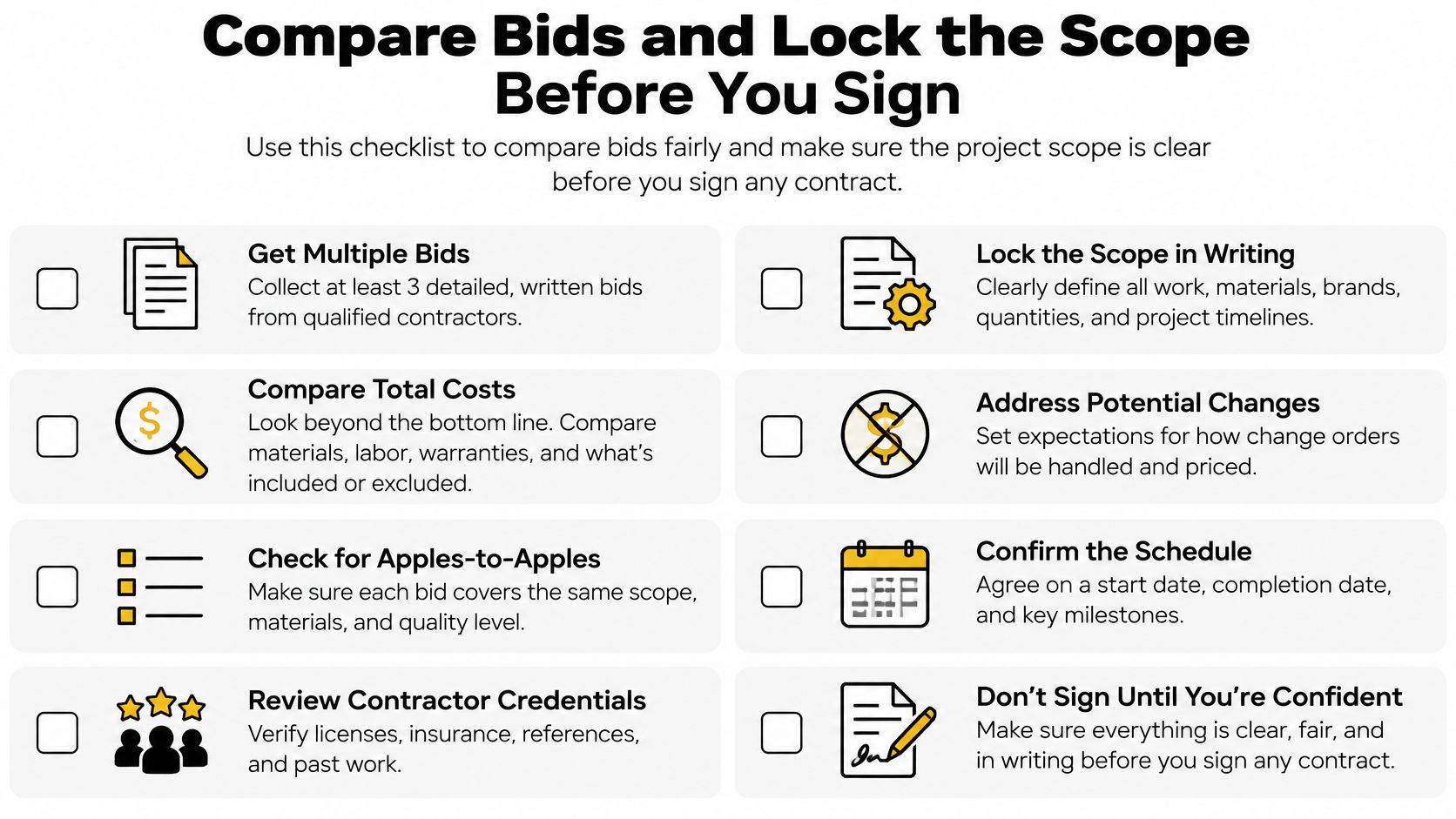
A written fixed-price proposal after a site walkthrough puts the agreed scope on paper before work begins. For questions about licensing and insurance, review this guide to hiring a licensed contractor in NYC.
Book a walkthrough this month and ask each contractor to price the same scope. Excellent Home Improvement offers a free on-site color and scope visit, followed by a written proposal; customers who request a free quote receive follow-up within one business day. Request an exterior painting quote from Excellent Home Improvement.