Washable Flat Paint: Rooms, Sheen and Care
Washable flat paint hides flaws and wipes clean within limits. Compare sheen, rooms, scrub ratings, and care versus eggshell and satin.
By Excellent Home Improvement & Remodeling

The usual advice is to avoid flat paint anywhere you might need to clean. That's too blunt. Washable flat paint can work on lived-in walls, but a soft appearance and easy stain removal are different properties. A coating with an impressive scrub rating can still be the wrong choice for cooking grease, crayon wax, or the handprints beside a light switch.
The better question isn't whether flat paint is washable. It's what you'll be washing off, how often, and what the finish will look like afterward.
Table of Contents
- What Washable Flat Paint Actually Is
- Flat Against Eggshell Satin and Semigloss
- Strengths, Limits and the Scrub Rating Gap
- Rooms That Suit Washable Flat Paint
- How to Wash a Flat Wall Without Burnish
- Pick the Right Sheen for Each Wall
What Washable Flat Paint Actually Is
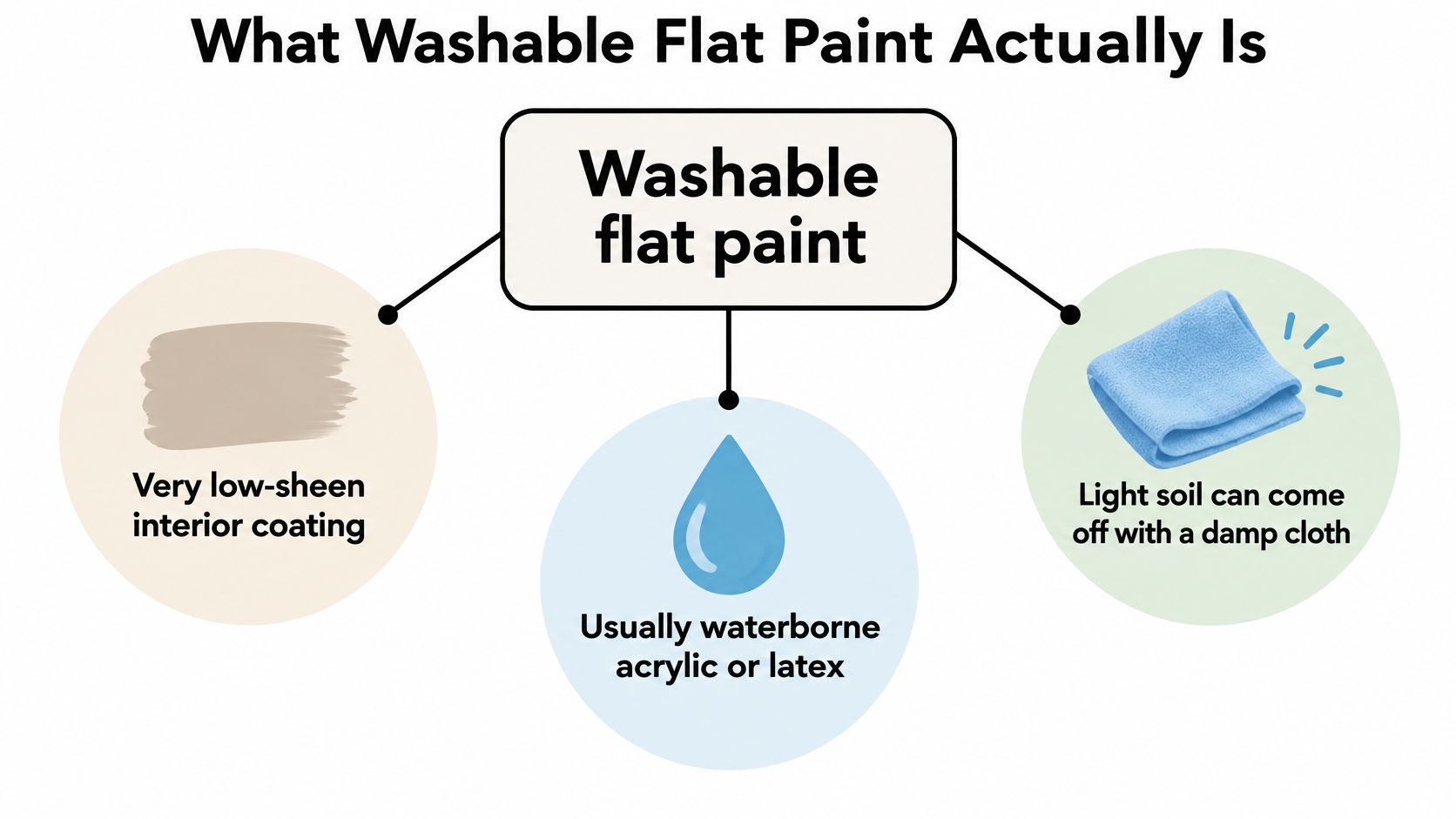
Washable flat paint is a very low-sheen interior coating, usually waterborne acrylic or latex, formulated so light soil can come off with a damp cloth. It offers an alternative to moving every wall up to eggshell or satin just to make occasional cleaning possible.
Think of a sealed chalkboard rather than loose chalk. The surface still looks soft and non-reflective, but a gentle wipe should lift a mark instead of smearing pigment. That's an analogy, not a promise that every stain will release or that every flat coating tolerates the same treatment.
Say you're refreshing an older Bronx apartment with repaired plaster and a long wall beside a window. You want the room to look calm in daylight without making every shallow repair visible. A washable flat is worth considering because it combines subdued reflection with some tolerance for household maintenance.
Flat describes reflected light
Flatness can be measured. The acrylic flat technical data sheet specifies approximately 1–3.5 gloss units at an 85-degree measurement angle and states that painted surfaces can be washed after two weeks, with cool temperatures or high humidity extending drying, recoating, and service times.
Low gloss makes minor drywall waves, sanding marks, and roller texture less conspicuous. It doesn't fill defects or repair uneven plaster. Instead, it reduces the reflected highlights that draw your eye to them.
That distinction matters in brownstones and older apartments, where making every wall perfectly planar may require more preparation than the project allows. A flat finish can make modest irregularities less distracting without pretending they've disappeared.
Installation and curing affect the result
A wall that feels dry isn't necessarily ready for cleaning. In an occupied home, keep the product's washing window on the work schedule alongside furniture delivery and final cleanup.
Application also matters. Changing roller nap, stopping midway across a wall, or leaving unevenly back-rolled areas can produce different film thicknesses and visible flashing, meaning patches that reflect light differently.
- Keep the roller consistent. Use the same nap and application technique across the wall.
- Finish complete wall sections. Work toward a corner rather than leaving a dry stopping line in the middle.
- Protect the curing surface. Keep furniture, bags, and cleaning cloths away until the coating is ready for service.
Practical rule: Choose flat for the appearance you want, then verify that the exact formula supports the maintenance you'll actually perform.
The sheen comparison below is a shortlist, not a durability guarantee based on finish names alone.
Flat Against Eggshell Satin and Semigloss
Interior sheens compared with washable flat
| Finish | Sheen and hiding | Cleaning expectation | Burnish risk | Typical rooms |
|---|---|---|---|---|
| Dead flat | Softest look, strongest flaw hiding, lowest gloss of the group | Dusting preferred; wet wiping can remove film | High if rubbed | Ceilings, low-touch formal walls |
| Washable flat | Very low sheen; still conceals minor waves | Damp cloth after full cure when the formula is rated | High at hand height and switches | Ceilings, bedrooms, selected halls and kids' walls |
| Eggshell | Soft glow, good hiding, more reflection than flat | Usually tolerates more frequent damp cleaning | Medium | Living rooms, adult bedrooms, dining walls |
| Satin | Noticeable sheen; reveals more texture | Generally better suited to repeated cleaning of scuffs and splashes | Lower | Kitchens, baths, family rooms, stair walls |
| Semigloss | Pronounced shine; exposes drywall flaws | Usually the strongest routine-cleaning choice in a comparable product range | Low | Trim, doors, suitably specified cabinets and bath walls |
Start with the visual compromise
Dead flat is the easiest choice when nobody touches the surface. On a ceiling or a formal wall behind furniture, the ability to disguise small imperfections often matters more than wet-cleaning performance. Don't buy an ordinary ceiling coating expecting it to behave like an engineered washable wall finish.
Washable flat keeps much of that quiet appearance while allowing gentle maintenance. It's useful when you dislike visible sheen but don't want a light fingerprint to trigger repainting. The trade-off is that a cleaned area must remain visually consistent with the surrounding wall, not merely free of dirt.
Eggshell introduces a soft glow. On living-room and dining-room walls, that can be a comfortable compromise between a subdued finish and more forgiving upkeep. You'll notice more reflection along patched areas, so surface preparation still deserves attention.
More sheen requires better preparation
Satin makes sense when cleaning is part of normal use rather than an occasional rescue. A family-room wall beside a snack table, for example, has a different maintenance burden from the wall behind a bookcase. Satin's more noticeable reflection means rough patches and uneven roller work become harder to overlook.
Semigloss is often more appropriate on doors and trim than across broad plaster walls. Its shine can look crisp on well-prepared woodwork while making a bowed wall look worse. For cabinetry, choose a coating intended for that substrate and service, rather than assuming that any semigloss wall paint will suffice.
These are practical tendencies within comparable product categories. A purpose-built low-sheen coating can outperform a basic higher-sheen product, so sheen isn't a substitute for the technical specification.
Don't solve a cleaning problem by adding shine everywhere. Put the more durable finish where people actually touch the room.
Light direction deserves a sample test, too. A finish that looks restrained on a small card may appear much shinier across a wall facing a window. Apply a sample to a prepared area and inspect it in daylight and under the room's lamps.
For ceilings and rarely touched formal walls, flat is an easy starting point. For greasy areas beside a range, it usually isn't. Use the finish categories to narrow your choices, then let the soil on each wall determine the final specification.
Strengths, Limits and the Scrub Rating Gap
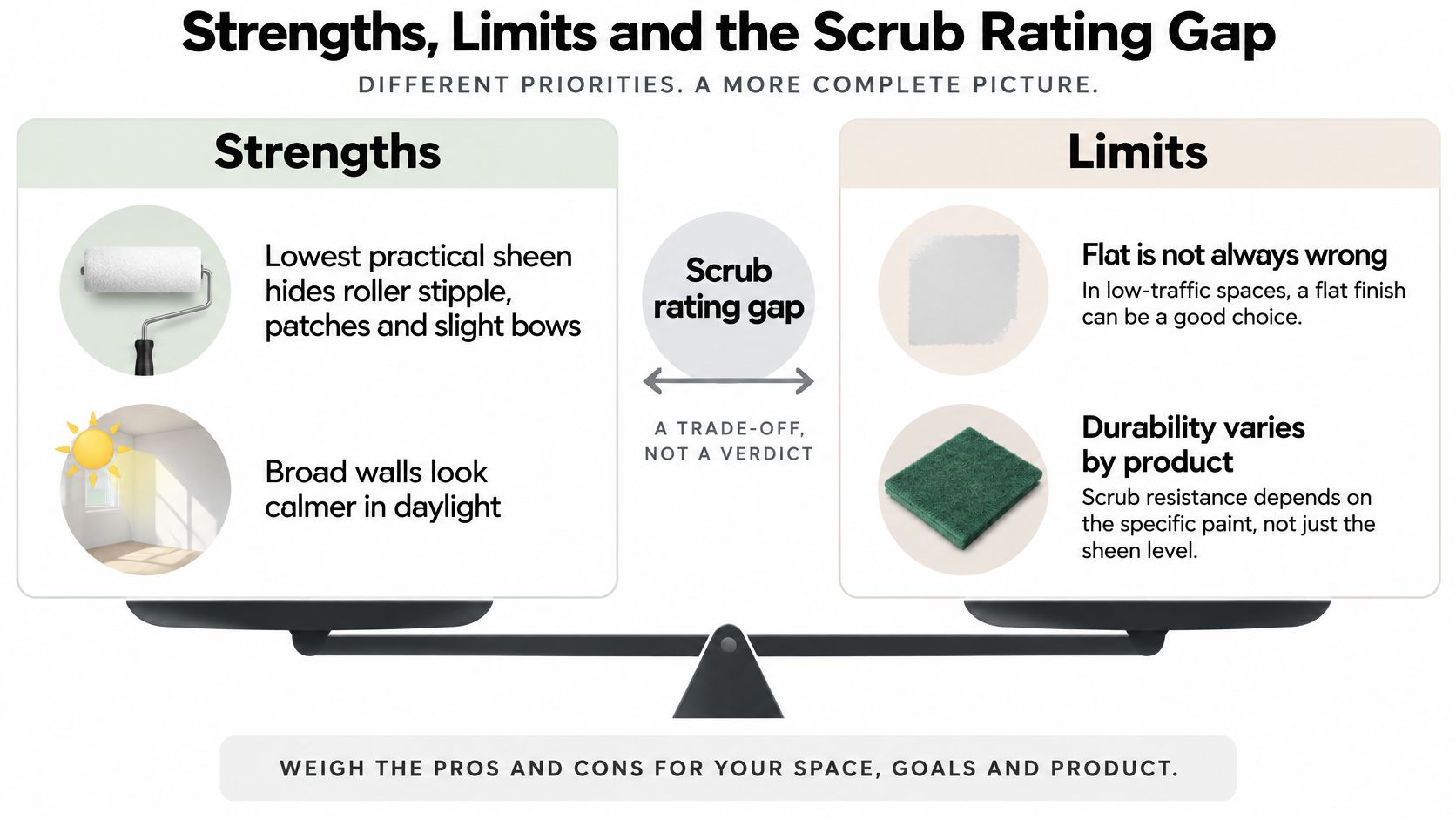
A washable flat isn't a compromise you should automatically reject. It can be the right finish when appearance, surface condition, and cleaning demands align. The mistake is treating the word washable as if it describes every kind of durability.
The distinction is explicit in the ASTM washability standard and related testing framework: ASTM D3450 evaluates removal of soilant discoloration, while ASTM D2486 evaluates resistance to erosion from repeated scrubbing, and scrub resistance doesn't necessarily predict stain-removal performance.
That separates two questions homeowners often combine: Did the dirt come off, and did the paint survive the attempt?
Where a washable flat earns its place
On broad walls, the restrained surface can keep daylight and lamps from emphasizing every slight bow or roller stipple. This is especially useful when you're retaining existing plaster rather than rebuilding the entire surface.
A suitable washable formulation also gives you a maintenance option between doing nothing and repainting. Light fingerprints or pencil marks may respond to careful cleaning, provided the manufacturer supports that use. You don't have to choose satin solely because someone might touch the wall.
Waterborne interior coatings also fit occupied-home work more comfortably than older solvent-based approaches. The architectural-coatings trends report describes the shift toward lower-odor, faster-drying waterborne formulations. That's useful during renovation, although ventilation and product-specific occupancy instructions still matter.
The strongest case for washable flat is therefore specific: you value subdued reflection, the wall has manageable imperfections, and cleaning will be light rather than forceful.
What the finish can't solve
A durable film can remain stained. Grease may leave discoloration, crayon may leave wax, and marker dye may persist even when the coating hasn't visibly worn away. Continuing to rub doesn't turn abrasion resistance into stain resistance.
The reverse can happen, too. A mark may disappear while the cleaned patch develops a different sheen. From across the room, that patch can be more distracting than the original fingerprint.
Color changes the practical tolerance for these differences. On a dark, strongly lit wall, a polished area or overlapping application mark may be conspicuous. If you want a deep color in a contact-heavy location, include a cleaning trial in the sample process rather than judging only the fresh paint.
Poor substrate preparation creates another limit. Unevenly sealed patches can absorb paint differently and remain visible after cleaning. Where repairs are extensive, a coordinated drywall installation and finishing plan matters more than buying a more expensive topcoat.
Ask questions that match the actual stain
A scrub number without its test conditions is incomplete. Ask the paint supplier for information about the exact finish you intend to buy, not a related eggshell product or a general claim for the whole range.
- Test method. Which standard was used, and what does the reported result measure?
- Reported performance. Is the result a cycle count, a comparison with a reference coating, or a class under a named system?
- Stains tested. Were the test marks relevant to your room, such as cooking residue, hand oils, or children's art materials?
- Cleaning conditions. What cleaner, concentration, tool, and pressure were used?
- Curing conditions. How mature was the film when tested, and what service instructions apply at home?
- Exact sheen. Does the result apply to the flat formulation and intended color base?
These questions prevent a false comparison. A product tested against easily removed soil isn't automatically the best answer for oily residue. Likewise, a coating that survives substantial abrasion may still disappoint if its surface changes visibly during cleaning.
Why the highest scrub number can lose
Consider a hallway and a kitchen wall. In the hallway, occasional shoe scuffs may make film toughness important. Beside a cooking area, the bigger problem may be removing oily deposits without leaving a visible patch.
Choosing solely by scrub resistance treats those jobs as identical. They aren't.
Specification check: Ask what remained after cleaning, not just how long the paint lasted under the test apparatus.
Touch-up expectations belong in the decision as well. If you're comfortable repainting an uninterrupted wall section when an unusual stain occurs, you can prioritize appearance differently from a property manager who needs frequent spot maintenance between occupants.
Choose washable flat when gentle upkeep is realistic and a soft finish is a priority. When people repeatedly clean the same contact area, specify a coating intended for that workload, even if it introduces more sheen.
Rooms That Suit Washable Flat Paint
Where washable flat fits in a home
| Surface | Typical soil | Washable flat fit | Stronger alternative |
|---|---|---|---|
| Ceilings | Dust, rare contact | Best fit | Stay flat |
| Formal living walls | Light dust, occasional fingerprints | Strong fit | Eggshell if wiped often |
| Adult bedrooms | Hand oils at the bed wall | Usually fits | Eggshell on the contact wall |
| Hallways | Scuffs and hand oils at switch height | Only when scrub-rated and cleaned gently | Eggshell or satin |
| Stair approaches | Repeated hand contact | Marginal | Satin |
| Kids' quiet walls | Light marks | Fits | Keep flat |
| Kids' play wall | Crayon, marker, food | Poor for stains | Eggshell or satin |
| Kitchen walls away from cooking | Splashes, light grease | Conditional on product rating | Satin |
| Walls behind the range | Heavy grease | Poor fit | Satin or semigloss where paint is appropriate |
| Bath splash zone | Soap and water | Poor fit | Suitable satin or semigloss outside direct wet areas |
Divide rooms by activity
A room name doesn't describe every wall within it. In an adult bedroom, the wall opposite the bed may rarely be touched, while the area beside the pillows collects hand and hair oils. Keeping the quieter walls flat and giving the contact wall a more cleanable finish can preserve the intended appearance.
Hallways need closer inspection. Look at switches, corners near doorways, and places where people put on shoes. A washable flat may work along an open stretch but struggle at a narrow entrance where bags and shoulders repeatedly brush the surface.
Children's rooms also benefit from a wall-by-wall choice. A reading corner has a different exposure from an art table. Put the more stain-tolerant coating where food, markers, and sticky hands are likely, rather than relying on gentle-cleaning instructions that don't match family life.
Treat cooking and bathing as separate exposures
Kitchen walls away from the range can be candidates for rated washable flat. Behind the cooking surface, prioritize a cleanable backsplash or a coating suited to grease and the appliance's installation requirements. Don't expect wall paint to substitute for a protective surface where one is needed.
In bathrooms, distinguish humidity from direct water exposure. An ordinary washable flat isn't automatically suitable for either, and shower interiors need a proper wet-area assembly, not just a shinier paint. A bathroom renovation plan should coordinate ventilation, waterproofing, and finish selection.
Estimate material after choosing the surfaces
For a planning reference, the manufacturer's interior matte product page listed approximately 250–400 square feet per gallon in 2025. That's a product-specific coverage range, not a guarantee for every washable flat.
Allow for repeat coats, application loss, and the surface's texture and porosity. Don't calculate the purchase using only the highest coverage figure on a rough or newly repaired wall.
Before buying, sketch the room and mark each wall by exposure. That simple exercise is more useful than ordering the same finish for the entire home.
How to Wash a Flat Wall Without Burnish
Burnishing is a physical change in the surface, not dirt that needs another pass. Rubbing can polish the paint film and leave a shiny patch. Once that happens, more scrubbing usually makes the contrast worse.
Laboratory durability doesn't eliminate this risk. The ASTM scrub-resistance method distinguishes cycles to failure from performance relative to a reference paint and warns that brush stiffness, equipment condition, application, and drying conditions affect results. A household abrasive pad doesn't reproduce a controlled laboratory comparison.
Use a gentle cleaning routine
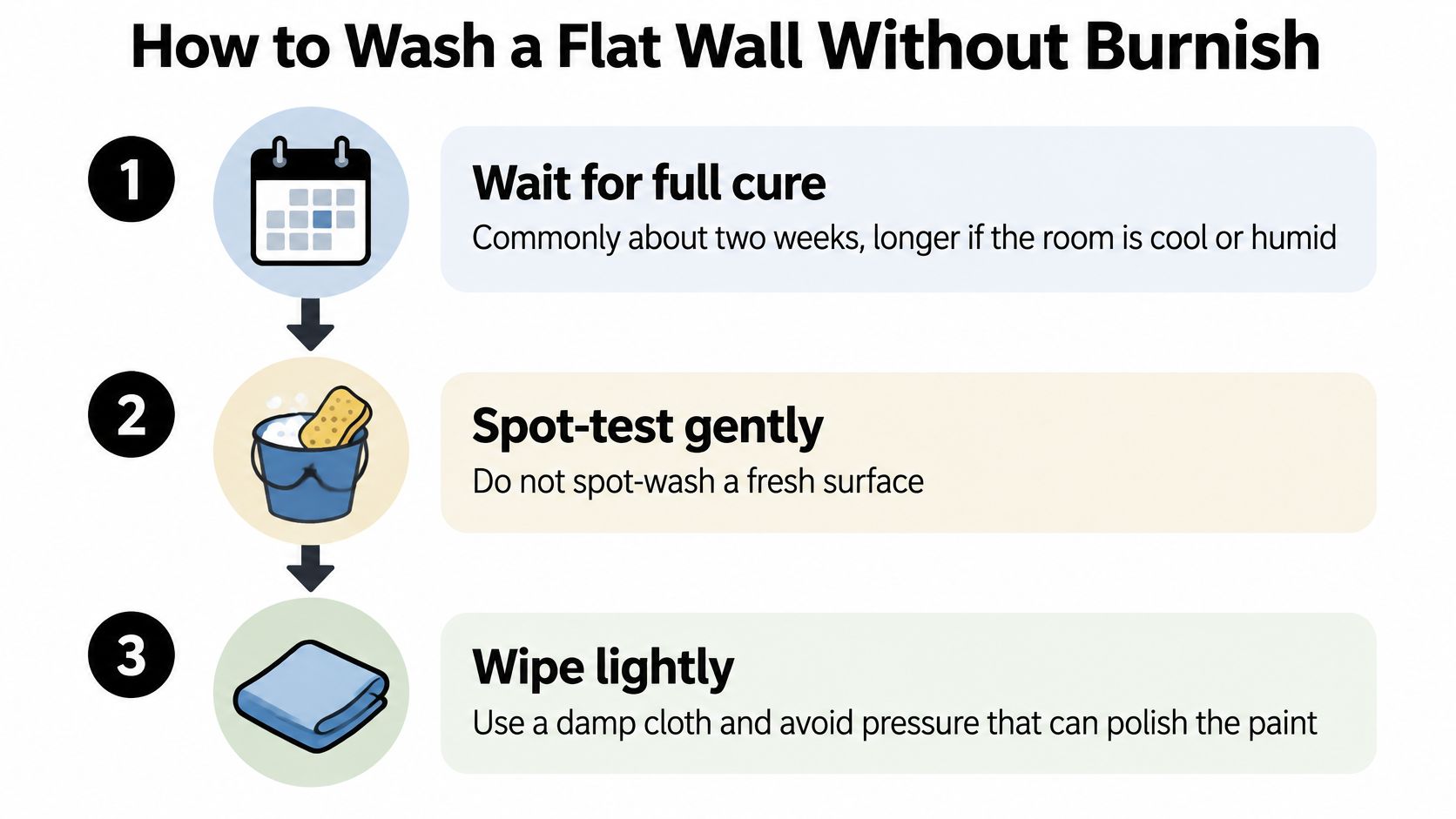
Confirm that the coating is ready. Check its technical data sheet for the washing or service interval. Don't spot-wash a freshly painted wall because it feels dry.
Remove loose dust. Use a clean, dry microfiber cloth with a light touch. This prevents grit from becoming an abrasive when you introduce water.
Prepare mild cleaning water. Start with plain water; if necessary, add a small amount of neutral detergent. Unless the coating instructions expressly permit them, avoid bleach, ammonia, strong degreasers, and abrasive cleaning sponges.
Test a concealed area. Try the method behind furniture or near an unobtrusive edge. Let the test dry before judging it, especially over repaired drywall where the appearance may already be uneven.
Wipe with a barely damp cloth. Wring out excess water and move lightly in a consistent direction. Don't concentrate pressure on the center of a stubborn mark or soak the wall.
Remove detergent residue. Use another soft cloth dampened with clean water. Leaving cleaner on the surface can create a visible outline after drying.
Blot and assess. Lift moisture with a dry cloth rather than rubbing in circles. Wait until the area dries before deciding whether the mark remains.
Know when to stop
If a gentle cleaning attempt doesn't remove the stain, stop escalating pressure. Check whether the manufacturer recommends another approved method; otherwise, plan a repair rather than wearing through the film.
A tiny touch-up can show a different texture or sheen, so test it before committing. For a conspicuous repair, recoating the uninterrupted wall section from corner to corner may produce a more consistent result.
Once the finish is ready for use, address fresh marks lightly instead of letting them accumulate. Keep furniture from rubbing the wall, particularly during the curing period.
Pick the Right Sheen for Each Wall
A finish schedule makes paint choices easier to follow from room to room. Mark each wall as low touch, occasional wipe, or frequent cleaning, then match the coating to how the surface will be used.
For low-touch walls, appearance can lead the decision. Occasional-wipe walls call for a washable formulation with relevant performance information. For frequent cleaning, check that the coating suits the likely stains and cleaning method. A soft, low-sheen look and easy wiping are separate properties.
Resolve the awkward cases before painting
- Dark feature walls. View the sample under side lighting and decide whether its appearance is worth the care it may need. If not, choose a more forgiving coating or a different finish.
- New patches. Use compatible drywall primer to even out absorption. Add stain-blocking treatment when the repair calls for it.
- Older painted surfaces. Address potential lead hazards before sanding or disturbing existing coatings. Include safe preparation in the project scope.
Follow the room-by-room exposure rule, then keep the color formula, sheen, product label, and application notes together. These details help match the original coating when a repair is needed later.
Put the finish schedule in writing
For a larger project, record the substrate repair, primer, application method, and return-to-service instructions for each finish. A painting-services scope should spell out those details before work begins, particularly when furniture must remain in an occupied apartment.
Sketch each room and mark every wall by exposure. Schedule touch-up coats after the original paint has cured according to its product instructions, and keep the same product and application details for future repairs. Choose washable flat where its appearance matters and your care routine is realistic.
Excellent Home Improvement offers surface preparation, drywall work, and interior painting as part of residential renovation projects. If finish choices are tied to patching, a kitchen or bathroom remodel, or a full-home refresh, visit Excellent Home Improvement to discuss a wall-by-wall sheen plan and a work schedule that allows coatings to cure before normal use.